
Delicious, healthy foods that nourish your mind, body & soul
Our foods and breads are specially crafted to be delicious, clean, and free from inflammatory ingredients. We see food as a life force, and specialize in products that are nutrient-rich, that support the immune system, boost the gut-brain connection, and enhance well-being, health and happiness.
no grains
All our products are naturally grain and gluten free – with immune supporting, functional, and healthy ingredients.
We avoid using flours that can be inflammatory for sensitive people such as legume flours, nightshade /potato flours, and grains such as oat and corn flours due to their inflammatory properties.
no sugar alcohols
Our breads contain no added sugars or artificial sweeteners.
No high-fructose corn syrup or sugar alcohols – ever!
no bad oils
We only use healthy, organic oils and fats such as avocado oil, MCT oil, olive oil, tallow and grass-fed butter.
Our breads contain absolutely no trans fats or inflammatory seed oils!
pasture raised & grass fed
We use organic, pasture raised, eggs and organic grass-fed dairy products.
We also have vegan options!
no gums, additives or perservatives
We never use any gums, artificial additives or preservatives.
organic
We use organic ingredients and source as much as we can locally, and from farms that supports regenerative farming, healthy soils, and microbial biodiversity.
how to store your bread
KEEP YOUR BREAD FRESH LONGER
Our breads do not contain any preservatives. The bread will keep fresh up to 5 days or more at room temperature, and several months in the freezer.
To always have fresh bread that is soft on the inside and with a satisfying crust on the outside, we recommend to slice it and freeze it, and then heat it up either in the toaster, toaster oven, or in a regular oven before enjoying it.
PRO TIP
If you put some wax paper or parchment paper between the slices it can help keep the slices separate when frozen.
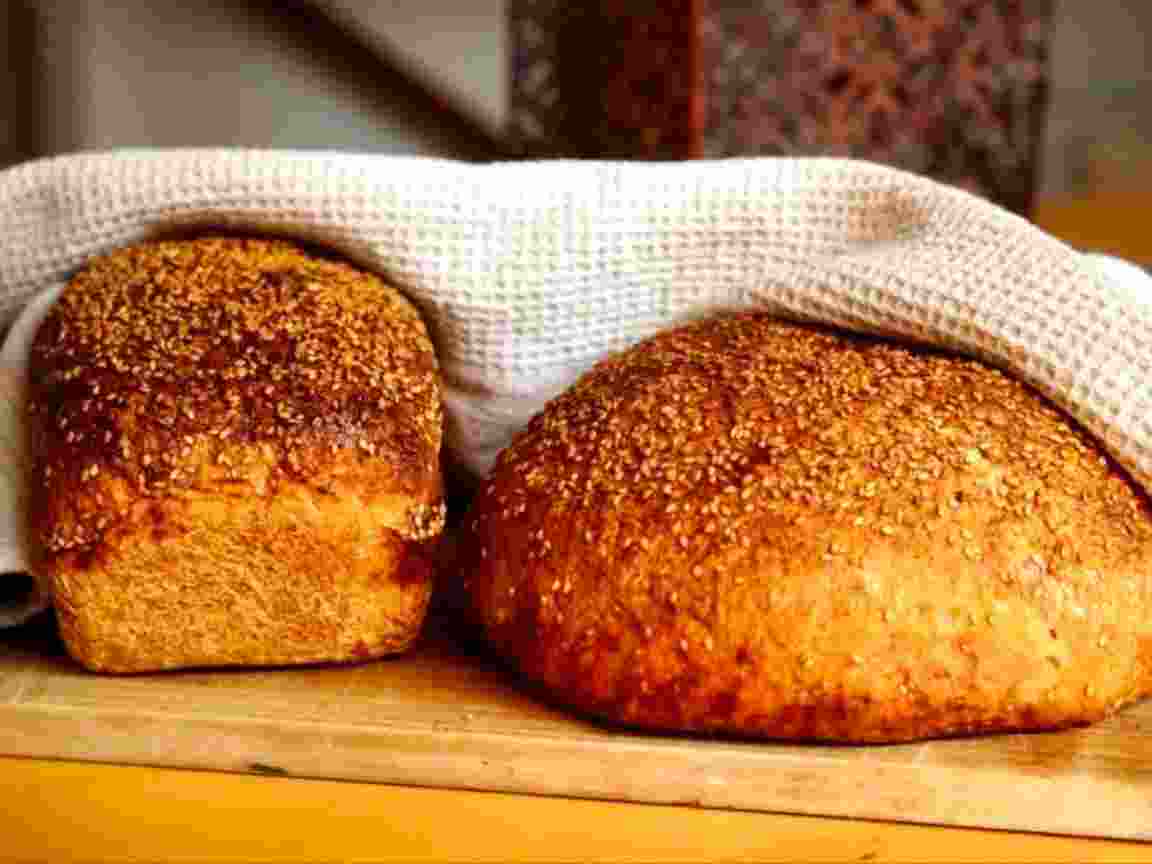
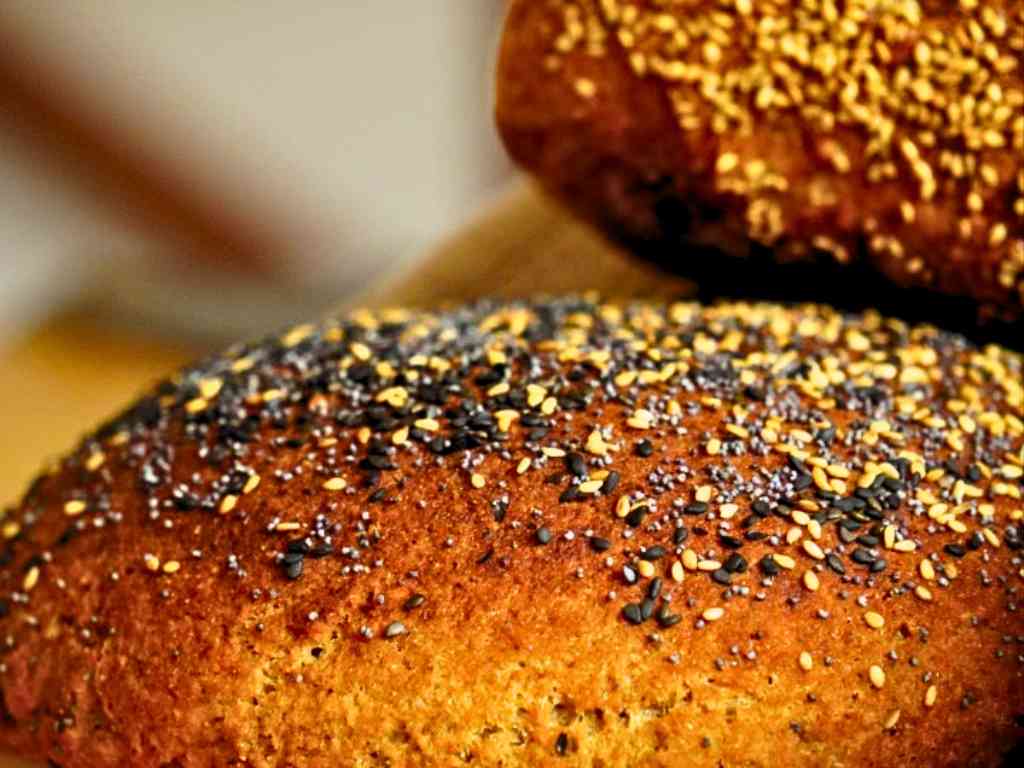
TOAST THE SLICES – GET A CRUNCHY CRUST
Put your frozen slices in the toaster, and the bread will crisp up with a delicious, crunchy crust — and will taste great!
PUT THE WHOLE BREAD IN THE OVEN AND GET A DELICIOUS CRUNCHY CRUST
If you want to consume the whole loaf, you can put the bread in the oven.
Heat your oven to 350⁰F, then sprinkle a dash of water over the bread with your hand or with a spray bottle.
Put the bread in the oven directly on the rack for 5-10 minutes, and you’ll get a bread that is soft on the inside, and with a satisfying crust on the outside.
American and European breads
what’s the difference?
Common ingredients in the US
and their negative effects on health
AMERICAN AND EUROPEAN BREAD – WHAT IS THE DIFFERENCE?
American bread contains much more additives, preservatives, emulsifiers, and fillers than European bread, and many of the common ingredients are banned in Europe, and other countries
due to their adverse effects on human health.
American bread and baked goods has higher gluten content, added sugars such as high fructose corn syrup and food dyes.
American crops are commonly sprayed with glyphosate (Round Up) to dry the crops before harvest, (except organic crops), glyphosate is banned or restricted in most countries in Europe, and many other countries around the world,
GLUTEN CONTENT IN EUROPE AND THE US
• US Wheat Flour:
Approximately two-thirds of American flour is derived from hard wheat, containing 10-17% protein (gluten).
• European Wheat Flour:
Flour in the European Union primarily comes from soft wheat, comprising about 6-10% protein.
The higher gluten content in American flour may contribute to intolerance problems for some individuals.
GMO’s AND GUT HEALTH
Increased Lectin Levels:
Many genetically modified crops are engineered to possess specific traits, such as resistance to bugs, pests or mold and by engineering and increasing the crops own defense system also called lectins, they become more resistant.
Lectins are proteins found naturally in many plants, including grains, legumes and certain fruits and vegetables. For sensitive individuals, consuming crops and grains with elevated levels of these proteins can exacerbate symptoms such as digestive issues, inflammation, and autoimmune responses.
Mandatory labeling for GMO’s began Jan. 1, 2022 in the US, and foods and packages have include a text that says “bioengineered,” or “derived from bioengineering.”
inflammation and gut health:
Lectins have been shown to interact with the lining of the gastrointestinal tract, potentially leading to intestinal permeability (leaky gut) and inflammation, digestive issues or autoimmune conditions. Research have found that lectins can bind to cells in the digestive system. This binding may have the following negative consequences:
- Disruption of the breakdown of nutrients
- The absorption of essential minerals
- The function of the gut microbiome
- Triggering of autoimmune responses
- Bloating, gas, and/or diarrhea
- Nausea, vomiting, and/or stomach painStudies have also found that undigested lectins may enter the bloodstream, and trigger an immune response and provoke the development of autoimmune disorders.
ADDITIVES, PRESERVATIVES AND EMULSIFIERS THAT ARE BANNED ELSEWHERE, BUT NOT IN THE US.
Several additives and preservatives commonly found in American bread are banned elsewhere due to health concerns. Here’s a closer look at these common ingredients and their associated health effects:
Azodicarbonamide (ADA E927).
Azodicarbonamide (ADA E927) is used to bleach flour and make dough more elastic, ADA is found in various baked goods such as, breads, bagels, pastries, pizza, tortillas, hamburger buns, frozen dinners, pasta mixes, and packaged baked goods.
It has been linked to respiratory issues, allergies and asthma”
ADA is banned in Europe, Australia, and other countries due to its potential health risks. Some have referred to it as a ‘yoga mat’ chemical because of its use in foamed plastics.
Potassium bromate (KBrO3) and Potassium iodate (KIO3) (E917):
These additives are used as flour improvers to strengthen dough and facilitate rising. However, both have been linked to various cancers.
Potassium bromate, classified as a category 2B carcinogen, can cause kidney damage.
It’s banned in the EU, Canada, China, India, Brazil, and other countries due to health concerns.
BHA (E320) & BHT (E321):
Butylated hydroxyanisole (BHA) and butylated hydroxytoluene (BHT) are preservatives used in foods and personal care products. Both are considered human carcinogens and may promote tumor growth.
They’re also linked to hormone disruption, organ-system toxicity. causing liver, thyroid and kidney problems and affecting lung function and blood coagulation.
BHA and BHT are banned in Japan, Europe, Canada, Australia, and New Zealand due to their health risks.
Gums and Emulsifiers:
Emulsifiers extend shelf life but may promote chronic inflammation, affecting gut health and immune system negatively.
Studies has shown an increase of the risk of inflammatory bowel diseases such as Crohn’s disease and ulcerative colitis. Studies also found that emulsifiers can be linked to type 2 diabetes, cardiovascular and liver diseases,
Some common emulsifiers include soy lecithin, carrageenan, mono- and diglycerides, carboxymethylcellulose, and polysorbate.
GLYPHOSATE / HERBICIDES / FUNGICIDES
Herbicides, insecticides, and fungicides are widely and commonly used on non-organic grains.
Glyphosate is banned or restricted in many countries In Europe and around the world, due to health concerns. Organic crops have not been treated with glyphosate.
rbGH and rbST
Recombinate Bovine Growth Hormone (rbGH) and Recombinate Bovine Somatotropin (rbST) are artificial growth hormones that increase milk production in cows.
Japan, Europe, Canada, Australia, and New Zealand have banned these hormones due to health risks for the cows.
There are also ongoing studies on rbGH and rbST and increased risk for human colon, pancreas, breast and prostate cancer.
Artificial food dyes
Artificial dyes have been associated with various health issues. Research has linked consumption of synthetic dyes to an increased risk for numerous conditions, like tumors and hyperactivity in children. Synthetic food dyes are banned in Europe and Australia, where more natural coloring compounds are used.
freedom to enjoy delicious food
- GRAIN FREE
- GLUTEN FREE
- CORN FREE
- LECTIN FREE
- SUGAR AND SWEETENER FREE
- NIGHTSHADE FREE
- INFLAMMATORY OIL FREE
- TRANS FAT FREE
- SOY FREE
- ADDITIVE FREE
- ALLERGEN & ADDITIVE FREE
ORGANIC
GRASS FED
KETO & PALEO FRIENDLY
PREBIOTIC GUT BOOSTERS
NO BLOATING INGREDIENTS
HEALTHY OILS & FATS
PASTURE RAISED
ADAPTOGENIC
VEGAN OPTIONS
NON GMO
NUTRIENT RICH
HISSNNDDKKA
- ORGANIC
- GRASS FED
- KETO & PALEO FRIENDLY
- PREBIOTIC GUT BOOSTERS
- NO BLOATING INGREDIENTS
- HEALTHY OILS & FATS
- PASTURE RAISED
- ADAPTOGENIC
- VEGAN OPTIONS
- NON GMO
- NUTRIENT RICH
These statements have not been evaluated by the Food and Drug Administration. These products are not intended to diagnose, treat, cure, or prevent any disease.